Mengisi Ruang Kosong Di Rumah Bupati Kebumen - Bagian I

Dalam situs resmi Pemerintah Kabupaten Kebumen terdapat Ruang Diseminasi yang selama ini dibiarkan kosong. Ruang-ruang itu adalah 15 Sub Sektor dalam Ekonomi Kreatif,

KONSISTENSI KI ESSER KARTON

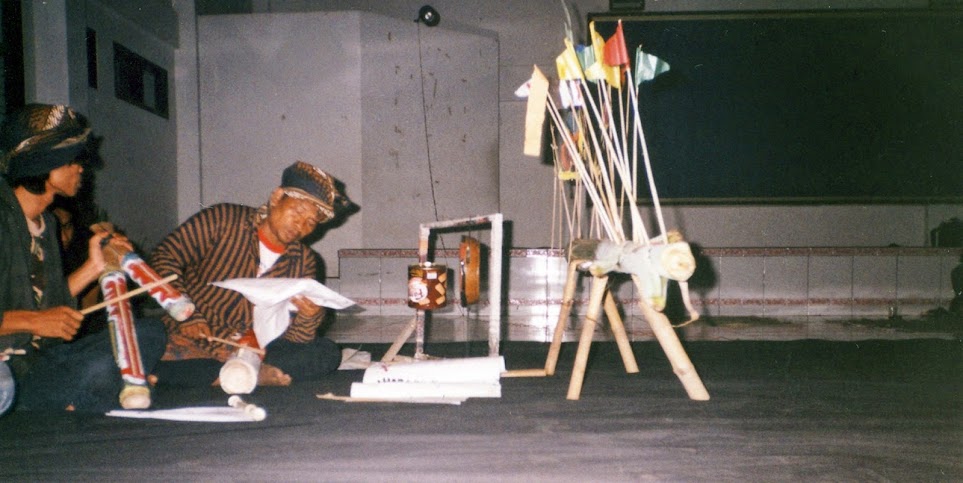
Slamet Riyanto yang biasa dipanggil Esser adalah satu seniman multi talenta yang konsisten memelihara sikap berkesenian melalui beragam karya kreatif. Satu diantaranya adalah wayang yang semua tokohnya dibuat dari kardus bekas kemasan dan limbah lainnya.

MENGINTIP RUANG KOSONG DI RUMAH BUPATI BAG..

Masih banyak pekerjaan rumah yang harus diselesaikan di sini.

MENGISI RUANG KOSONG DI RUMAH BUPATI KEBUMEN - BAGIAN III

OVOP Kerajinan Pandan adalah satu sub tema yang jadi Pemenang dalam lomba karya tulis ilmiah Riset Unggulan Daerah (RUD) tahun 2013. Sampai saat ini implementasi hasilnya belum jelas. Akankah nasibnya seperti Hipando yang terbengkelai ?

Tampilkan postingan dengan label Indonesia. Tampilkan semua postingan

Sabtu, 22 Maret 2014

OTOP (One Tambon One Product) Movements in Thailand


Presented by: Miss Nisakorn Jungjaroentham
Department of Industrial Promotion
Ministry of Industry Thailand

1.   Background

In 2001, Thai government adopted Japan’s principle, well-known as One Village One product (OVOP) which was started in Oita prefecture in 1969 by the initiation of Mr.MorihikoHiramatsu, the governor of Oita. In that time, the Sufficient Economy Philosophy has been initiative since HisMajesty King Bhumibol Adulyadej had been brought up in the speech throughout 68 years of the thrones.

The OTOP concept isregarded about the usage ofusing capacity of local communities, producing from local wisdom, and applying raw materials locally availableat concept will assist to create community business, to reduce migration of rural people, and to encourage the local communities not to their communities.OTOP product does not mean only physical product but it also mean concerning about natural resources and environment conservation, Thai local wisdom preservative tourism, art and culture, norm, knowledge exchange for producing OTOP quality product.

As declared to the Thai parliamentin 2001, the OTOPimplementation has the following objectives:

  1.  To create jobs and increase income to the communities.
  2. To strengthen communities towards self-reliance;
  3.  To promote local wisdom, use of local materials and local as main resources;
  4. To promote human resource development and capacity-cultivation of people in communities;
  5. To promote creative thinking of communities in product development in live with local lifestyle and objectives.


The Sufficiency Economy Philosophy framework comprisesthree components and two underlying conditions First, Sufficiency entails three components: Moderation, Reasonableness, and requirement for a Self immunity system, i.e. the ability to cope with shocks from internal and external changes.Second, two underlying conditions necessary to achieve.

Sufficiency are Knowledge andMorality. ‘Sufficiency Economy’ requires breadth and thoroughness in planning,carefulness in applying knowledge, and the implementation of those plans. As for theMoral/Ethical condition, ‘Sufficiency Economy’ enforces the conditions that people areto possess -- honesty and integrity -- while conducting their lives with perseverance,harmlessness and generosity.

2.  Organizational Structure

By virtue of the Prime Minister’s regulation on the National OTOP administrative committee 2001 (NOAC) and amendment in 2002 was established in order to implement the OTOP project/program in line with the policy. A Deputy Prime Minister was assigned by the Prime Minister to be the Chairman of the NOAC. The ministers and representative of all related parties are committees. The Perm anent Secretary of Prime Minister’s officer is committee and secretary and the director General of the Community Development Department is committee and assistant secretary. Main duties of NOAC are establishing policy, setting strategic, cooperative with all related parties, support local Administrative Agencies to join OTOP, and supporting Community Enterprise work.

Later on, there are driving mechanisms including 6 sub-committees and ad hoc working groups to undertake activities in cooperation of public and private sector, and academia of several fields, such as:

1.    Marketing Promotion Subcommittee
2.   Food and Beverage Development Subcommittee
3.   Fabric and Apparel Development Subcommittee
4.   Decorative items and Souvenirs  Development Subcommittee
5.   Herbal Product Development Subcommittee
6.   Regional One Tambon One Product Subcommittee (at regional and Province )

3.  Important implementation of OTOP Promotion

The Thai Government has been rearrange, improve and develop the various program for OTOP production Through NOAC and Sub committees The office of the permanent Secretary of The Prime Minister’s office has cooperated with other government agencies in order to integrate all activities and organize as the operational plan for each fiscal year such as

3.1.                    OTOP product Champion

Currently, NOAC has performed OTOP Product Champion Project, assigned The Minister of Interior as the chairman of the project,the objectives, of this project consist of providing opportunity for local product be developed in quality, and standardization for expanding via selection of best OTOP product from provincial, regional, and nation level. Furthermore, creation of the local link-global reach is amast.
           
The OTOP product Champion of 2012 was organized with 10,090 products sent to take part in the contest of which the largest group of 2,762 products or 27.38 % was appraised at the level of 3 star while 3,448 products or 34.18 % was appraised at the level of 4 star 1,628 products or 16.14 % was appraised at the level of 5 star.

Community Product Standards

In 2003, Thai Industrial standards Institute, Ministry of Industry set up Thai Community product Standard (TCPs) and mark to serve as qualification requirements for the product. In addition, consultation is provided to support.

3.2.                   Ps Development Program

The government of Thailand has been supporting the OTOP development related with 3Ps (People, Product, and Process) by technical assistance/experts in quality control, product or package design, education and training, case study and consultation. This program has been set up by 4 subcommittee (Food and Beverage Development Subcommittee,Fabric and Apparel Development Subcommittee, decorative items and Souvenirs Development Subcommittee and Herbal Product Development Subcommittee)

3.3          Marketing Promotion

1.      OTOP midyear and OTOP City Trade Fair this major even of the country under the theme of Thai wisdom wore Organized to be an exhibition and trade fair for OTOP products which were selected as excellent OTOP or OTOP Product Champion (OPC) of 77 provinces sub districts nationwide.
2.     Establishing outlets for OTOP products including outlets in central “OTOP in the City”, regional areas.
3.     Setting up OTOP kiosks, shelves, and corners in department stores shops gas station and airport.
4.     Organizing trade fairs consisting of more domestic and international trade fairs of local and oversea events.


3.4          OTOP Village Champion (OVC)

Implemented in 2006, the project of OTOP Village Champion contest was based on the concept that OTOP products, as part of locality’s identity culture, tradition and way of life, they could be linked with tourism and related services.
                  
The OVC contest was composed of 4 categories with criteria as follows;
1.      Community Excellence (P-people)
2.     Product Development Excellence (P-product)
3.     Tourist Destination Excellence (P-place)
4.     Uniqueness Preservation Excellence (P-preserve)

3.5          Network Building for Communities’ strength

Entrepreneur Network started in 2004, OTOP producer network was implemented. By promoting and supporting the establishment of the OTOP NetworkCommittees at the level of district, province, region, and country. Network of Community Knowledge was promoted to create the linkages of communities’ body of knowledge.ie, local educational Institutes, local agencies with special expertise, local intellectuals so that they could support one another.

4. Result of Implementation

1.      Economic Dimension.

Before commencing OTOP,people earned income from the sale of community-bases products in year 2001 with the amount of 215,549,534 Baht (us$ 6.74 million approximately,1 us$=32 Baht) after launching of the OTOP program in September 2001,people earned more income from the community-based product. The sale of year 2002 reached 16,837,140,742 Baht (us$526.16 million approximately) and the sale of year 2012 reached 4,112 billion Baht (us$ 131,584 billion approximately).
Moreover,OTOP program was a great help in creating jobs and occupations to communities of more than 22,762 villages nationwide as it created 36,236 OTOP producers and they were over 1,268260 employees, especially housewives and the OTOP members elders that enjoyed the increase of their household’s earnings.

2.     Social Dimension

People have greater sense of Thai values; cherish identity, culture, local wisdom, as turning to use more Thai product and consuming more communities-based products. Besides, people in communities are able to think/develop local wisdom, and usage of local materials and labor in developing community-based product. So, they will have a lot more chances to talk and confer and exchange their ideas such constructive atmosphere brought along good community relationship with excellent spirit of interdependence leading to the building of community networks.

3.     Environmental Dimension

People are aware of environmental issues and participate more in natural resources and environmental conservations.

4.     Development Dimension

The OTOP program create an integrative working approach, multilateral cooperation and coordinated effort not only among the government agencies but also among educational institute, private sector, local public sector and people to develop community-based products as prescribed in the goals and objectives of this program.

Key successful Factors

  1. Effective mechanism system and strong integrative management of budget/work/human resource plans are observed by all government agencies
  2. Provision for education, skills and quality as well as products development are channeled to communities with the aim of helping them to be able to perform individual thinking and action.
  3. Network of Communities are very strong and create the linkages of communities’ body of knowledge,i.e. local educational institutes, local agencies with special expertise and local intellectuals.
  4. Co-working among the public agencies both in central and local, private sector, educational institutes and people in the communities.

Jumat, 29 Maret 2013

OVOP Indonesia ?


Mampukah koperasi menjadi fasilitator pengembangan OVOP di Indonesia? Bisa ya atau tidak. Jawaban pasti akan banyak bergantung pada masing-masing koperasi yang ditunjuk oleh Kementrian KUKM dalam menerjemahkan OVOP sehingga aplikasinya tepat sasaran.

OVOP di Indonesia
Sejauh ini, Indonesia belum memiliki konsep dasar OVOP seperti OTOP di Thailand.  Berikut adalah tentang OTOP.
Tujuan OTOP di Thailand:
  1. Untuk membangun sebuah sistem database yang komprehensif, yang mengakomodasi informasi bagi setiap Tambon di Thailand
  2. Untuk mempromosikan produk lokal dari setiap Tambon, dan untuk memfasilitasi prosedur jual belinya.
  3. Untuk membawa teknologi internet ke desa-desa dan ini adalah titik awal dari Proyek Internet Tambon
  4. Untuk  mendorong dan mempromosikan pariwisata di Thailand ke tingkat Tambon. Sehingga pendapatan akan dibagikan lebih besar kepada masyarakat pedesaan.
  5. Untuk membantu masyarakat pedesaan bertukar informasi, ide, dan meningkatkan komunikasi di berbagai Tambon.
Konsep OVOP sangat fleksibel dan integratif. Artinya, setiap daerah atau wilayah dapat menetapkan batasan dan tujuannya. Jika sasaran yang ingin dituju adalah skala nasional, pendekatan yang digunakan biasanya top-down terutama berkait dengan penyediaan anggaran. Kelemahan pendekatan ini, semangat kreatif yang menjadi acuan pokok konsep dasar OVOP bisa tereliminasi oleh proses birokrasi yang sangat panjang dan acapkali terjadi salah persepsi ketika harus diaplikasikan kepada kelompok sasaran. Dalam istilah komunikasi, pendekatan top-bottom sering menimbulkan denging (noise). Apalagi jika pejabat yang berkompeten menangani di daerah tidak senada dan seirama karena “beda selera” atau orientasi politik dengan yang di pusat. Lebih kacau lagi jika denging itu ditambah bisikan yang bernada provokatif.

Sementara itu, untuk mengaplikasikan konsep OVOP dengan pendekatan bottom up, kendala utama: kelangkaan inisiatif karena beragam sebab. Yang paling klasik tentu soal ketersediaan anggaran. Ibarat berdagang, harus ada modal finansial dulu sebelum melangkah. Inisiatif akan muncul, mengikuti aliran dananya. Dengan kata lain, jangan berharap ada inisiatif jika anggaran tidak tersedia. Kondisi seperti inilah yang sering dijumpai ketika ada usulan dari ”bawah”. Belum lagi masalah tumpang tindih kebijakan antara satu dan lain dinas atau kementrian.

Mengacu pada gagasan dasar OVOP, produk yang dihasilkan oleh masyarakat memiliki kedekatan erat dengan budaya lokal dan bernilai tambah tinggi. Kerajinan adalah representatif untuk hal ini. Setidaknya ada 2 atau dinas yang mungkin “merasa memiliki” yaitu dinas perindustrian/perdagangan, dinas koperasi dan UKM serta dinas Pariwisata, Budaya dan Ekonomi Kreatif. Bagi daerah tertentu, mungkin ada penggabungan SKPD (satuan kerja pemerintah daerah) yang terkait dengan aktivitas produktif dan kreatif masyarakat seperti Kabupaten Kutai Kertanegara yang menggabungkannya jadi Disperindagkop (Dinas Perindustrian, Perdagangan, Koperasi & UKM). Semakin banyak dinas atau SKPD yang merasa berkepentingan dengan dengan pengembangan kegiatan OVOP sebenarnya semakin baik agar ada upaya maksimal untuk mewujudkannya.

Tetapi, dalam realita sering berbeda. Setiap SKPD punya kepentingan dan biasanya tidak mau digabungkan. Eksklusifitas kepentingan inilah jadi satu masalah serius bagi pengembangan aplikasi OVOP di banyak daerah, termasuk Kabupaten Kebumen. Karena itu, pada acara Temu Solusi OVOP Jawa Tengah 22 Februari 2013 lalu, Deputi Bidang Pengkajian Sumber Daya Manusia Kementrian Koperasi dan UKM tidak menyebut kerajinan anyaman pandan Kebumen sebagai bagian yang telah diprogramkan pada 2013. Selain carica di Wonosobo dan bordir di Kudus, gula kelapa di Cilacap, batik Solo, kain sarung goyor di Pemalang dan Klaten, tenun troso Jepara dan kerajinan ikan pari di Boyolali.

Inilah yang menjadi satu pertanyaan besar saya dan teman-teman di lapangan, mengapa ketika dalam peringatan Hari Koperasi 2012 di Kabupaten Kebumen, pemecahan rekor Muri atas nama Pemerintah Kabupaten Kebumen dibebankan kepada para perajin anyaman pandan ? Selanjutnya, mengapa aktivitas itu dipindahkan lokasinya dari area publik (alun-alun Kebumen) ke area pribadi (pabrik Dubexcraft) ? Pertanyaan paling krusial, mengapa untuk acara seakbar itu para perajin tidak diapresiasi secara layak ? Apakah hal ini yang jadi penyebab utama tidak masuknya kerajinan anyaman pandan Kabupaten Kebumen yang telah membawa Tasikmalaya, Jogja dan Bali menjadi pemasok utama ekspor kerajinan anyaman pandan ke dalam program OVOP??

Bagaimana mungkin mengaplikasikan satu program pembangunan yang diadopsi dari negara lain tanpa pemahaman memadai  tentang faktor kultural masyarakatnya? Jepang diakui sebagai negara maju yang masih kuat menjaga tradisi dan budaya masyarakatnya.  Sebagai negara yang  pernah dijajah Jepang, sedikit banyak, masyarakat Indonesia memahami kondisi itu sebagai nilai tambah kemajuan Jepang dibandingkan dengan Eropa maupun Amerika Serikat. Disiplin dan kerja keras adalah tradisi masyarakat Jepang yang tidak mudah diaplikasikan di Indonesia. Apalagi di masa sekarang, kebanyakan dari pemimpin formal di semua lini, tidak menjadikan kedua tradisi itu sebagai pemacu semangat yang menumbuh-kembangkan tantangan-tantangan kreatif sebagai realisasi prinsip dasar OVOP di bidang pengembangan sumber daya manusia.

Praktik yang lazim terjadi justru sebaliknya. Orang-orang yang memelihara prinsip kemandirian (sama dengan menjaga kemerdekaan) justru tidak disukai oleh para pengambil keputusan politik (baca sebagai pejabat publik)  karena akan mengganggu kepentingan pribadi atau kelompoknya. Kekusutan ini diperparah dengan pola rekrutmen pejabat publik yang sarat praktik KKN dan semakin telanjang. Dan lebih kusut lagi karena semakin jarang ditemui pejabat publik mau bekerja sama dengan orang-orang  yang menjaga independensi  dalam upaya pemberdayaan masyarakat lokal.
OVOP adalah program idealistik dengan syarat-syarat yang sangat ketat.  Potensi kreatif masyarakat berbasis kultural dan bernilai tambah tinggi. Penghormatan atas hal itu adalah pengembangan aktivitas produktif tanpa merusak tradisi yang dijunjung tinggi oleh masyarakat lokal. Modernisasi dimungkinkan pada sisi rancang bangun produk (product design) dengan pendekatan teknologi informasi. Sebelum hal ini diterapkan, masyarakat lokal harus dikondisikan dengan nilai-nilai budaya yang terdapat pada teknologi itu. Sehingga tidak menimbulkan cultural shock yang kemudian akan mematikan potensi budaya lokal secara sistematik.
Kemudahan mengakses informasi internet dari telepon selular yang telah menjangkau ke desa-desa di satu sisi menumbuhkan harapan baru bagi pengembangan potensi lokal. Di sisi lain, hal itu justru akan menjadi bencana kebudayaan ketika pengguna tidak memahami nilai-nilai kultural yang ada di dalamnya. Sangat mungkin terjadi perubahan pola pikir yang semula produktif menjadi konsumtif. Dalam koteks OVOP, potensi lokal yang seharusnya menjadi titik pijak dan pacu pengembangan aspek ekonomi dapat berbalik arah menjadi faktor perusak utama potensi itu. Di sinilah sisi menarik dari konsep aplikasi OVOP di berbagai negara. Kita (Indonesia) bisa mewujudkan gagasan brilian Mr.  Morihiko Hiramatsu dengan sikap hati-hati, tapi tanpa curiga. Jika Thailand mampu dengan OTOP, suatu saat mungkin kita akan meluncurkan ODOB (One District One Brand) atau justru sebaliknya, benar-benar jadi bodo ? (bersambung)

Minggu, 24 Maret 2013

Lomba Desain Aneka Kerajinan 2013


  1. Bagi yang kesulitan download dapat menghubungi kami di email sdpidisperindag@yahoo.co.id
  2. Kunjungi grup : https://www.facebook.com/media/set/?set=a.150021728489311.33603.100004444537058&type=1


Selasa, 12 Maret 2013

Guitars From Indonesia


Balawan Guitar Series

"Making the guitar is an attitude, desire, and passion to always produce a better guitar every day. guitar techs, To production operators receive the same attention for a given input.
Posts are taken from the site www.marliqueguitar.com. brand native of Indonesia abroad, can rarely be said really. genuine Indonesian brand have made a breakthrough that quite encouraging.


Working closely with several distributors in Denmark and Australia, will Marlique Guitar go international. market in the two states are known to be very concern with the quality and high standards. signature or artist series. artist series is top end of many range the product of a manufacturer. artist series is based on the specifications of the guitar, which often override the needs of most musicians. artist series well said custom the artist, in this case Ridho Hafiedz (Slank guitarist)
. 


Read more at http://indonesiakreatif.net/en/article/success-story/radix-guitar/#R2OzpoFsMLbLV40e.99